
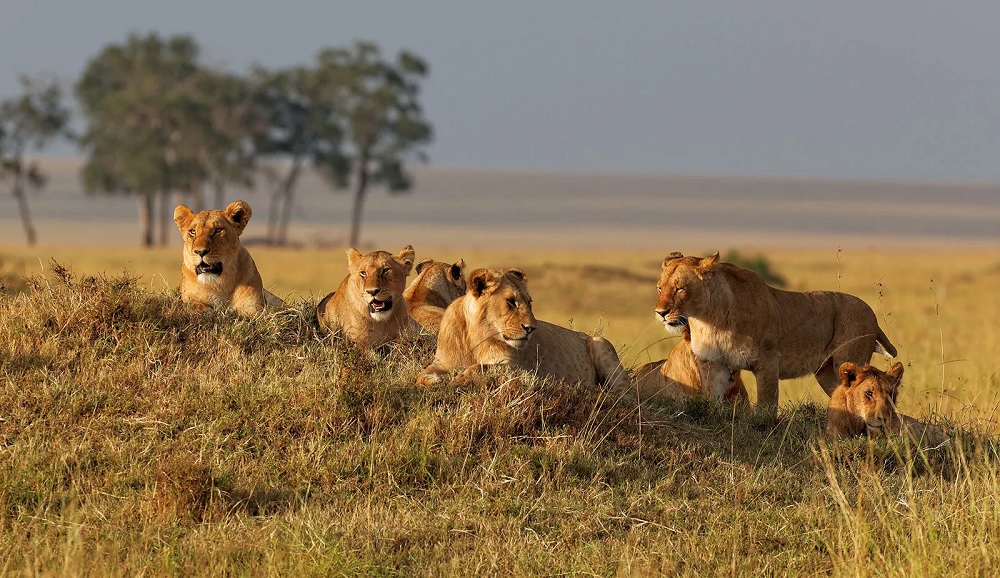
The lion, often referred to as the “king of the jungle,” holds a prominent place in both the natural world and human culture. With its powerful physique, striking mane, and commanding presence, the lion is a symbol of strength and majesty. This article explores the intricate details of lions, from their physical traits and habitat to their social structure, hunting techniques, and conservation challenges.
Physical Characteristics
Lions are among the largest big cats, with males weighing between 330 to 550 pounds and females ranging from 265 to 400 pounds. Males are particularly distinguished by their impressive manes, which can vary in color from light tawny to deep black. The mane serves multiple purposes: it protects the neck during fights and signifies the male’s health and status. A darker and fuller mane often attracts females, as it is indicative of a strong genetic lineage.
Their tawny coats provide excellent camouflage in their natural habitats, primarily grasslands and savannas. With powerful jaws and sharp retractable claws, lions are equipped for hunting. Their teeth, designed for gripping and tearing, are particularly effective for consuming their prey.
Habitat and Distribution
Historically, lions roamed vast regions across Africa, Europe, and Asia. Today, their population is primarily concentrated in sub-Saharan Africa, with a small group of Asiatic lions residing in India’s Gir Forest. Lions thrive in open and semi-open environments, including savannas, grasslands, and scrub forests. These habitats offer the necessary resources for survival, including ample prey and shelter.
The decline in their habitat has been significant over the years, driven by human encroachment and agricultural expansion. Understanding their habitat requirements is crucial for developing effective conservation strategies.
Social Structure
Lions possess a unique social structure that sets them apart from other big cats. They live in groups called prides, typically consisting of several related females, their offspring, and a few dominant males. A pride may range in size from a small family of three to over twenty individuals.
The females in a pride form strong bonds, often hunting together and caring for the cubs communally. This cooperative behavior enhances their success in hunting and nurturing the young. Male lions, while more solitary by nature, play a critical role in protecting the pride’s territory and ensuring the safety of their young.
Competition for dominance among males is fierce. When new males take over a pride, they often drive out the resident males, leading to the potential loss of cubs fathered by the previous males. This behavior underscores the complexity of lion social dynamics and the importance of maintaining stability within the pride.
Hunting and Diet
As apex predators, lions primarily feed on large herbivores, such as zebras, wildebeests, and buffalo. Their hunting strategy often relies on teamwork and stealth. Female lions do the bulk of the hunting, working together to stalk and ambush their prey. They utilize the cover of tall grasses to approach their targets undetected.
Hunting typically occurs at night or during the cooler hours of the day when prey is less vigilant. After a successful hunt, the pride shares the meal, with dominant males eating first, followed by females and cubs. This sharing of resources reinforces social bonds within the pride and ensures that all members are well-nourished.
Conservation Challenges
Despite their regal status, lions face significant threats that have led to a decline in their populations. According to the International Union for Conservation of Nature (IUCN), lions are classified as vulnerable. Habitat loss, human-wildlife conflict, and poaching have severely impacted their numbers. As agricultural lands expand and human settlements encroach on lion habitats, conflicts often arise, with lions preying on livestock, leading to retaliatory killings.
Conservation efforts are vital for protecting these magnificent animals. Initiatives include establishing protected areas, promoting community-based conservation programs, and raising awareness about the ecological importance of lions. Collaborative efforts that involve local communities in conservation can help foster coexistence and reduce conflicts.
Cultural Significance
Lions have long been revered in human culture, symbolizing strength, courage, and nobility. In ancient Egypt, lions were associated with the goddess Sekhmet, representing power and protection. In heraldry, lions often appear on coats of arms, signifying bravery and leadership. Their portrayal in literature, film, and art continues to capture the human imagination, cementing their status as cultural icons.
The lion’s enduring presence in various cultures underscores its importance, not only as a majestic creature in the animal kingdom but also as a powerful symbol of human ideals. By understanding and respecting these incredible animals, we contribute to the efforts aimed at preserving their legacy for generations to come.

 Pet News Blog